
What the circulator does in a hydronic system
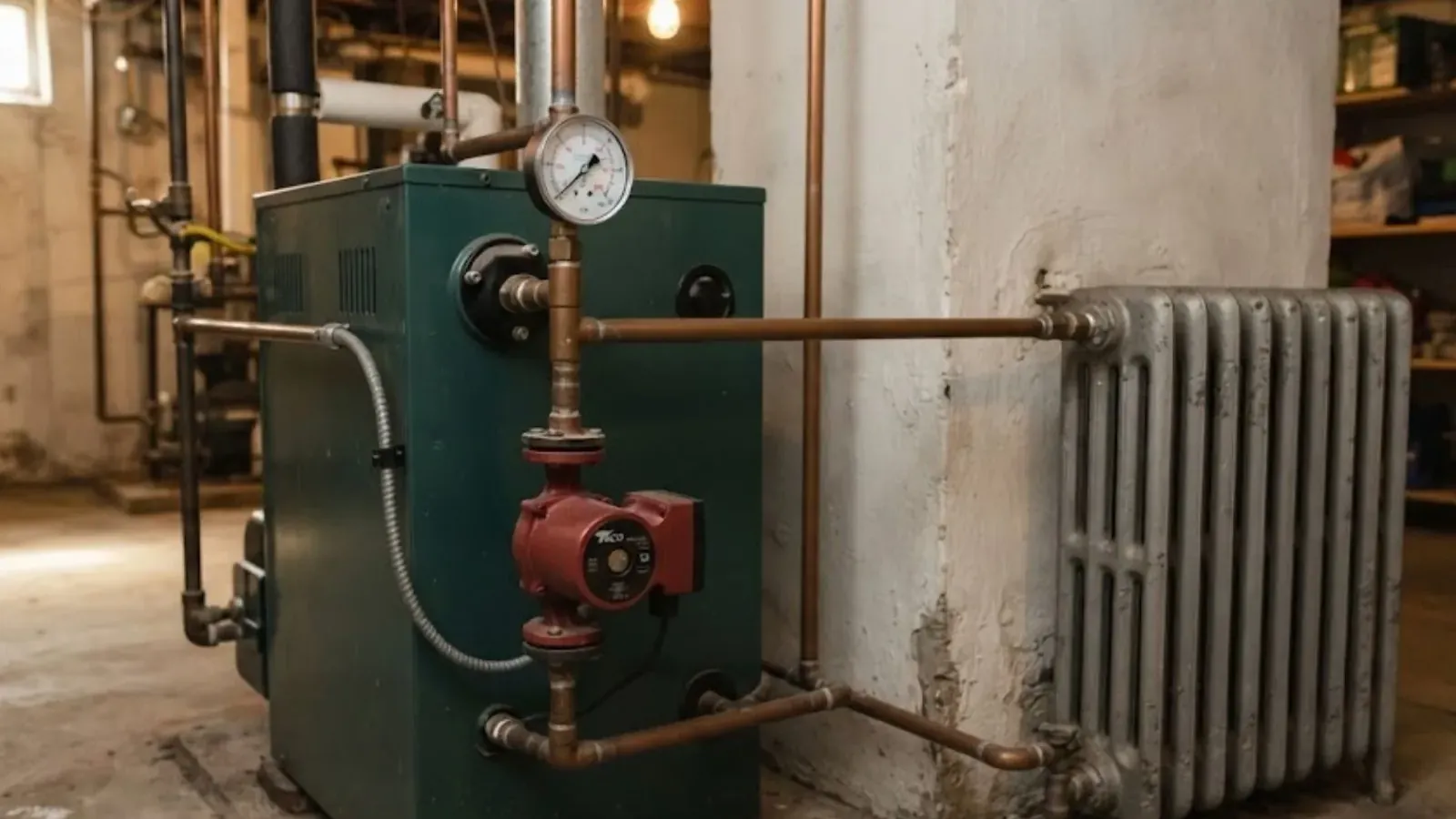
In a hot water heating system, the boiler heats water and the circulator moves it. The pump is a small motor and impeller, usually mounted on the supply or return pipe near the boiler, with flanges on each side and a wiring box on top.
Zone valves or multiple pumps split the house into zones. When a thermostat calls for heat, the boiler fires and the pump starts. If the pump fails, heated water stays in the boiler, which overheats and shuts down on its safety limit while the rooms stay cold.
Signs the pump is the problem
Other parts can cause the same symptoms, so use these signs together.
- The boiler fires and the supply pipe near the boiler gets hot, but pipes farther away stay cool.
- You can feel no vibration or hear no hum from the pump when the thermostat calls for heat.
- The pump hums but the shaft does not turn.
- A loud grinding, rattling or whining noise comes from the pump body.
- Water drips from the pump flanges or the motor housing.
- The boiler cycles on its high limit, short cycling over and over.
A pump that hums and does not spin can sometimes be freed. A pump that leaks from the seal or has worn bearings will not last, and a replacement is the honest answer.
Repair, rebuild or replace
Pump options depend on the type of pump and its age. This table lays out the choices.
| Option | When it makes sense | Trade-off |
|---|---|---|
| Free a stuck shaft | Pump hums, was idle over summer, and has no leak | Often a short fix, but the cause may be wear and it can return |
| Replace the motor or cartridge | Older three piece pumps with a replaceable motor or cartridge | Keeps the pump body and flanges in place, but parts must match |
| Replace the whole pump | Sealed wet rotor pumps, leaking pumps, or any pump near the end of its life | Highest parts cost of the three, but a clean fix |
| Upgrade to an ECM pump | Planning for efficiency, or a pump that runs constantly | Higher purchase price, lower power use and quieter running |
Match the replacement to the old pump's flange size, flange to flange length and head and flow needs.
A mismatch in size can leave some rooms cold or make the system noisy. The pump should match the system, and not just fit the flanges.
Boiler running but the house still cold?
Call the 24/7 line and tell us what you hear at the pump. We will tell you what we think is wrong and give a clear price before work starts.
Call (973) 488-5410Why circulators fail
Most circulators wear out from bearing wear, seal leaks, scale, or air trapped in the system. Dirty water carries rust and sludge, which wears the impeller and shaft. Constant running without enough water, a condition called dry running, burns out the bearings.
Electrical faults also play a part. A failed capacitor, a loose wire or a bad relay can make a good pump look dead. A technician checks voltage at the pump, then looks for flow before condemning the motor. That order avoids buying a pump you did not need.
How a pump replacement works
The steps below give a general picture of the job. The work involves hot water, wiring and sometimes gas appliances, so it is not a casual project.
- Turn off power to the boiler and let the water cool. Hot water can scald and the pipes stay hot for a long time.
- Close the isolation valves on either side of the pump. If there are no valves, the system must be partly drained.
- Disconnect the wires and note which goes where.
- Unbolt the flanges, catch the water and remove the old pump.
- Clean the flange faces and fit new gaskets or O rings, then bolt on the new pump with the arrow pointing in the direction of flow.
- Reconnect the wires, open the valves slowly, and bleed air from the pump and the system.
- Restore power and run a heating cycle. Check for leaks and confirm that heat reaches the far zones.
Installing isolation flanges on the new pump makes the next replacement far easier, and a good installer will suggest it.
Air, zone valves and other look-alikes
Air trapped in the system is a frequent cause of cold radiators and gurgling noises. Bleeding radiators and purging zones can restore flow. A failed zone valve can also block hot water to one area, and it will look like a bad pump to the eye.
If only one zone is cold, check the zone valve first. If every zone is cold and the boiler overheats, the pump is the more likely cause. Low system pressure and a stuck fill valve can also cause trouble, which is why a full check beats guessing.
If the trouble is hot water at the taps rather than heat in the radiators, our water heater repair page covers that side of the house.
Permits and older boiler systems around Kearny
As a general matter, older hot water systems often have older pumps and piping. Kearny's mills and housing date to the late 1800s and early 1900s, so old systems turn up often, though each home differs.
On permits, the state's Uniform Construction Code requires a permit for plumbing work on existing buildings, with one exemption for ordinary maintenance, which includes routine repair. Swapping a like for like pump may count, while larger changes may not. Kearny's page names water heaters, and not boilers, so ask the Kearny construction code office.
Source: NJ Uniform Construction Code summary from the state DCA, Kearny Construction Code Enforcement page and Kearny town history
What an emergency heat loss looks like
A dead pump in January is a heating emergency for many households. If the house is cold and the boiler is locked out, check for a tripped breaker or a blown fuse, make sure the thermostat is calling for heat and check that the boiler has water pressure.
Use space heaters carefully, keep them away from curtains and never run a gas oven for heat. If you smell gas, leave the building and call the gas utility or 911 before calling us. For anything else, our boiler repair team answers the 24/7 line.
What affects the cost of a pump replacement
We give a clear price before work starts. These factors drive it.
Parts availability can also vary by model and age. If your heat is out right now, call (973) 488-5410 and we will line up the right pump.
Keeping the new pump alive
A good pump can last many years if the water in the system is clean and the pressure is right. Bleed air out each season, keep the system at its set pressure and watch for small drips at the flanges.
A yearly boiler tune up checks the pump, pressure, controls and combustion. Systems that have been open to fresh water repeatedly, because of leaks, wear out pumps faster. Neighbors in Belleville and Harrison see the same patterns in older buildings.
Frequently asked questions
The classic sign is a boiler that fires while the radiators stay cool. The pump may hum without turning, make grinding noises, leak at the seal, or stay silent when the thermostat calls for heat. A technician confirms by testing power and flow.
A typical pump lasts many years, but the range is wide. Clean water and correct pressure extend life. Rust, scale, dry running and air shorten it. Many pumps die in the first cold snap after a summer of sitting idle.
Technically some homeowners do, but it involves hot water, electrical wiring and a pressurized system. A mistake can scald you or flood the basement. If you try, shut off power, let the system cool and match the size exactly.
Usually air, wrong size or a pump facing the wrong direction. Bleed the system again first. A pump that is too big can create flow noise in the piping, and a pump with the arrow reversed will not move water properly.
ECM pumps use less power and run quietly, which pays off in systems where the pump runs for much of the season. If the old pump only runs occasionally, the savings are smaller. We can compare both options.
Permit rules vary, so ask the Kearny construction code office at (201) 955-7880. The state exempts ordinary maintenance, including routine repair, but does not define every case. A like for like swap may qualify and larger changes may not.
Often yes, if the boiler is otherwise sound. A pump is a modest repair compared with a new boiler. If the boiler has leaks, heavy rust or repeated failures, put the pump cost next to a replacement plan before you decide.
No heat and not sure why? Call the 24/7 line and a dispatcher will help you narrow it down.
Call (973) 488-5410