
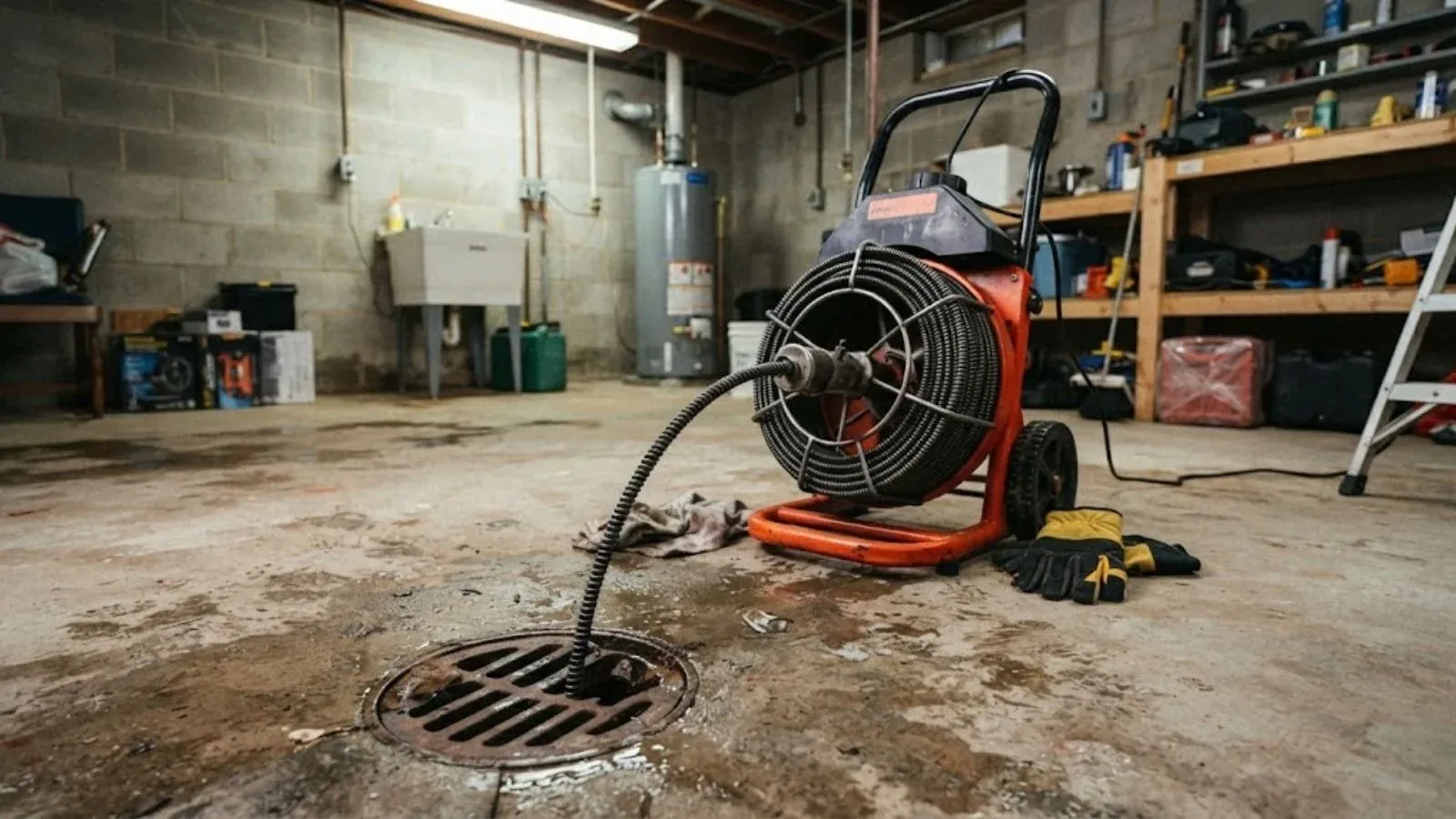
When a clogged drain is an emergency
Most slow drains can wait for a morning appointment. A drain becomes an emergency when wastewater is coming back into the house, when more than one fixture backs up at once, or when water is rising toward a finished basement. Those are the calls we dispatch right away, nights and weekends included, and same-day appointments are available for the rest when the schedule allows.
- Stop using every sink, tub, toilet, washer and dishwasher in the house. Each gallon you add has nowhere to go.
- If sewage is on the floor, keep children and pets out and do not walk through it barefoot.
- Turn off power to any basement outlet or appliance that is standing in water, but only if you can reach the switch while staying dry.
- Do not pour chemical drain cleaner into a drain that is already full. It sits in the pipe, and it can splash on whoever opens the line afterward.
- Call (973) 488-5410 and tell us which fixtures are affected. That one detail tells us whether we are chasing a fixture clog or a main line.
If the whole house is backing up, also read the town's backup guidance below, because the next call may need to go to Kearny DPW as well.
Which drain is actually blocked
Where the water shows up tells us most of what we need to know. A single slow sink or tub is almost always a clog in that fixture's own branch. Two or three fixtures on the same floor point to a shared branch line. A toilet that bubbles when the washer drains, or a floor drain that fills in the basement, usually means the main line to the street is restricted.
That sorting matters because the fix, the tool and the cost are different at each level.
A branch clog takes a small cable and a short visit. A main line clog can need a larger machine, a hydro jet or a camera to see what the line is doing. When you call, mention how many fixtures are slow and whether anyone has flushed or run water recently, and we will arrive with the right equipment instead of guessing at the door.
Cable, snake or jet: what each tool does
Callers often ask for a snake when what they need is a bigger tool, or ask for jetting when a simple cable would do. This is how the three common methods compare for a household drain.
| Method | Best for | Limits |
|---|---|---|
| Hand snake or drum cable | Single sink, tub or shower clogs, hair, soap and food buildup within the first 25 feet of line | Opens a hole through a blockage but can leave a coating of buildup on the pipe walls |
| Sectional cable machine | Main lines and long branches, roots, stuck toilet paper masses, 3 and 4 inch lines | Cuts through roots but regrowth comes back if the pipe has an open joint |
| Hydro jet | Grease, scale and sludge on pipe walls, repeat clogs, restaurant and multifamily lines | Not for a collapsed or badly cracked pipe, so a camera check usually comes first |
Choice of tool depends on pipe material, age and what the camera shows. See hydro jetting for the full process.
Drain snaking and cabling are the same job done at different scales. The cutter head is picked to match the pipe, and a clean line gets a final flush with water to confirm it drains at full speed.
Kitchen sink clogs and what is usually in them
Kitchen drains clog differently from bathroom drains. Cooking grease cools inside the pipe and coats the walls, then catches rice, coffee grounds and food scraps until the opening shrinks to a trickle. The slow drain you notice on Tuesday started months earlier.
If the sink empties slowly and the dishwasher or disposal is also acting up, the blockage may be past the disposal in the shared line. Our notes on garbage disposal repair cover the jams that mimic a clog. For the drain itself, we clear the branch line, flush it hot and show you what came out so you can see why it happened.
Water standing in a drain right now?
Call the 24/7 line and tell us which fixtures are backed up. We will route the right crew and give you a clear price before work starts.
Call (973) 488-5410Bathroom, tub and shower drains that fill with water
Hair and soap scum are the usual cause. Hair wraps around the stopper assembly and the first bend of the trap, and soap binds it into a mat. Pulling the stopper and clearing it by hand fixes many tubs. If the water still stands after that, the clog is deeper in the branch line and needs a cable.
A shower that drains slowly while the sink beside it runs fine points to that shower's own trap and arm. If both fixtures slow together, the shared branch is the problem. We also check the overflow opening on tubs, since a partial blockage there can send water back up through the stopper.
Who handles a sewer backup in Kearny
Kearny's public works page draws a clear line. If sewage backs up into a house, call the Kearny DPW at (201) 998-3700, and they will check whether the town's main sewer line is blocked. If the main is flowing, the blockage is in the lateral, the pipe that runs from your house to the main, and the property owner is responsible for maintaining and repairing it.
That is a practical reason to call us and the town on the same night.
DPW tells you whether the main is clear. We clear and camera-check the lateral so you know whether it needs repair, and we tell you what we find before any repair work starts. In the Meadowlands side of town and in South Kearny, wastewater is handled by the Kearny Municipal Utilities Authority, which keeps its own 24/7 emergency staff, so a backup there may involve them instead of DPW.
According to the Kearny construction code page, plumbing plans must follow the National Standard Plumbing Code, 2024 edition. That matters if cleaning leads to a repair, because replacing a section of drain is plumbing work that the code and an inspection cover.
What affects the price of drain cleaning
We give a clear price before work starts, and the number depends on a handful of real factors rather than a flat rate. These are the ones that move it most.
Homeowners insurance generally covers sudden accidental damage, not the cost of clearing a clog, and sewer backup damage often needs a separate endorsement, so read your policy before assuming it applies. Want your real number? Call (973) 488-5410 and describe what is backing up.
Signs the clog is more than a clog
A one-time clog gets cleared and stays cleared. These patterns mean something else is going on, and a camera inspection is worth the extra step.
- The same drain slows down again within weeks of being cleared, which usually means roots, a sag or heavy scale.
- Gurgling from other fixtures when one drains, a sign the line is partly blocked and pulling air.
- A damp spot or sewer odor near a drain line, which can mean a crack or a leak at a joint rather than a clog.
- A cable that stops at the same spot every time, especially at a distance that matches the street side of the house.
- Several drains backing up after heavy rain, which can point to the lateral or the main rather than your fixtures.
For lines that fail that test, we recommend a sewer camera inspection before any repair is quoted, and for roots or buildup that keeps returning, sewer line cleaning on a schedule is cheaper than repeat emergencies.
Older lines and why they clog more
Kearny became a town in 1899, and many of its streets sit over drain lines that have been in the ground a long time. Cast iron develops rough scale inside, clay joints let roots in, and older fittings can have small offsets that catch debris. Houses built before the 1960s are the most likely to have these materials, though we confirm with a camera rather than assuming.
In practice that means a drain cleaning call on an older house often includes a short look at the pipe, not just a pass with the cable.
If we find a belly that holds water or a joint that has separated, we explain what it is and what the repair options are, honestly including the option of monitoring it and cleaning on a schedule. Neighborhoods like Arlington, Schuylers Corner and the Kearny Uplands all have a mix of ages, so the answer is house by house. Across the Belleville Turnpike, North Arlington homes share many of the same issues.
What we do not do
We do not promise a clog will never return, because roots and grease keep growing and flowing. We do not recommend jetting a pipe that a camera shows is collapsed. And we do not clear a main line without telling you what the pipe looks like when we can see it, so you can decide on any repair with the facts in hand.
If the blockage turns out to be in the town's main, we say so, stop billing for the lateral and point you to DPW.
Frequently asked questions
It depends on which line is blocked, how easy it is to reach and which tool the job needs. A single sink branch is the lowest tier, a main line is higher, and a line that needs a jet and camera is higher still. We give a clear price before work starts, and you can call (973) 488-5410 to describe the problem and get a real number.
Yes. The dispatch line is open 24 hours a day, seven days a week, and a backup into the house is treated as an emergency at any hour. Same-day appointments are available for slower drains when the schedule allows.
A cable usually opens a hole through the blockage without removing the coating on the pipe wall. Grease, scale and roots then catch new debris. Hydro jetting, a camera check, or a repair at a sagging or cracked section stops the cycle.
We suggest not using it on a drain that is already full or a toilet that is backed up. The chemical sits in the pipe, can damage older fittings and puts caustic liquid in front of whoever opens the line next. A plunger or a small hand snake is a safer first step.
If sewage backs up into the house, call Kearny DPW at (201) 998-3700. They check the main. If the main is flowing, the blockage is in the lateral, which the property owner maintains, and that is the part we clear.
A properly sized cable or jet pressure does not harm sound pipe. A pipe that is already cracked or collapsed can be made worse, which is why we recommend a camera look first when a line has a history of trouble.
Yes. For landlords and property managers we can coordinate with tenants, document what we find for your records, and flag repeat clogs that suggest a pipe problem. Restaurants and multifamily buildings often benefit from scheduled hydro jetting.
Still not sure what you are dealing with? Call the 24/7 line and a dispatcher will walk through it with you.
Call (973) 488-5410