
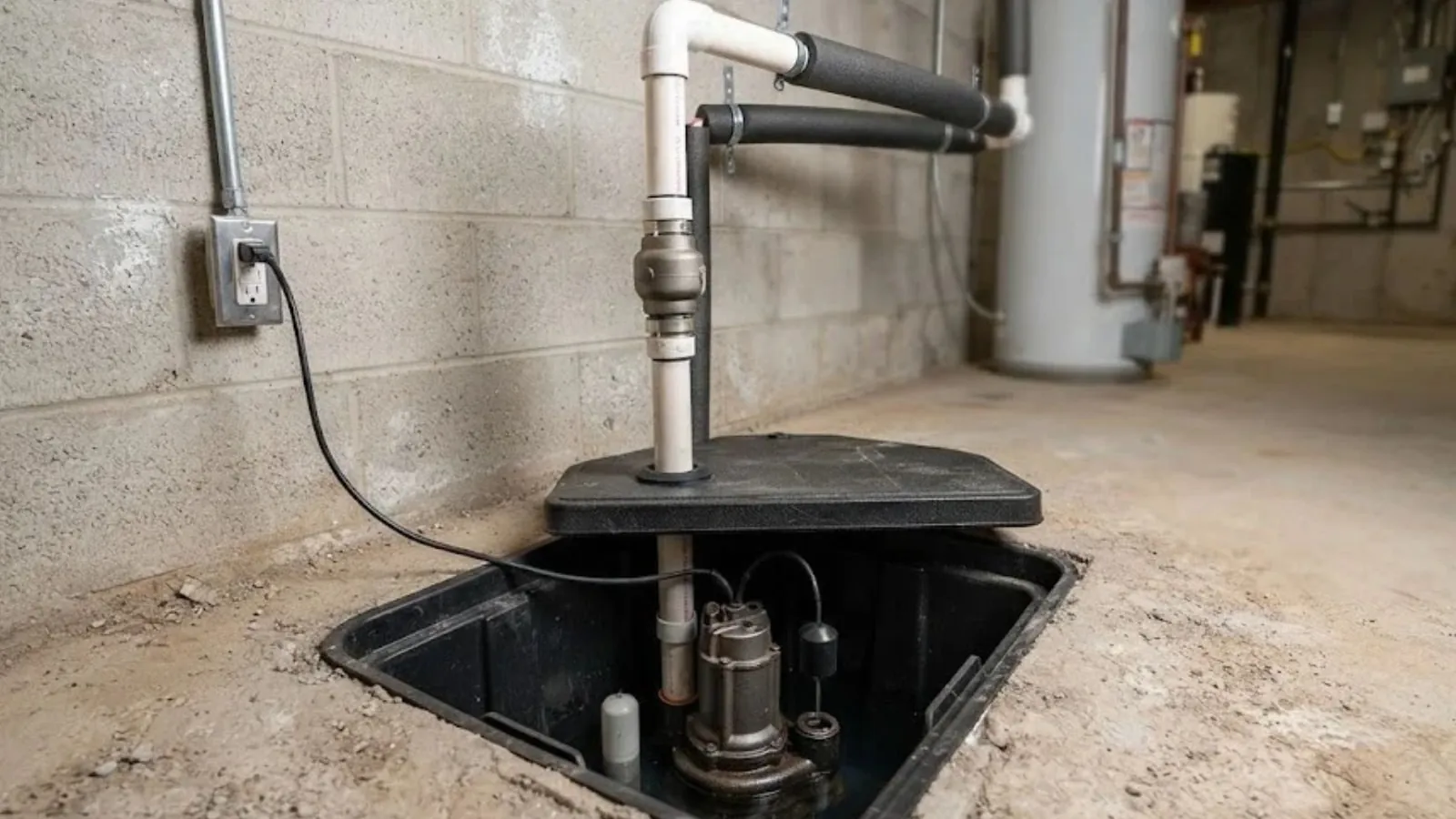
Sump pump failed with water rising: what to do first
The pit can go from half full to overflowing in a short time during heavy rain. Work through these steps in order, and call as soon as you have made the space safe.
- Look at the breaker panel from a dry spot. If the sump circuit tripped, reset it once. If it trips again, stop.
- If water is touching outlets, appliances or the panel, do not stand in it. Call the utility or an electrician before you go in.
- Check whether the pump is plugged into a GFCI outlet that tripped, then press the reset button on the outlet.
- Move boxes, furniture legs and electronics up off the floor, and use a bucket or wet vacuum to lower the pit level if you can do so safely.
- Call (973) 488-5410 and tell us the pump brand if you know it, whether it hums, and how high the water is in the pit.
A pump that hums but does not move water is often a stuck float or a jammed impeller. A pump that does nothing at all points to power or a dead motor.
Why sump pumps fail when you need them most
Most failures come from a handful of causes. The float switch gets stuck against the pit wall or tangled in the power cord. The check valve fails and the pumped water drains back into the pit, which makes the pump cycle constantly. The impeller jams on grit or small stones. Or the motor simply wears out, which for a household pump is commonly in the range of 7 to 10 years.
Power loss is the other big one. The pump works fine until a storm takes the electricity out at the same time the water comes in. That is why a battery or water-powered backup is part of a good installation, and why we ask about both when we scope a replacement.
Pedestal, submersible and backup: which pump fits
The right pump depends on the pit, the volume of water and how much you want to rely on it. Here is how the common types compare.
| Type | Strengths | Limits |
|---|---|---|
| Submersible | Sits in the pit, quiet, handles more water, less exposed to dust and debris | Harder to service, and the motor is wet all the time |
| Pedestal | Motor sits above the pit, easier to reach, often cheaper | Louder, shorter life in many cases, and needs a narrow pit |
| Battery backup | Runs when the power is out, as a second pump in the same pit or its own pit | Battery needs testing and eventual replacement |
| Water-powered backup | No electricity or battery at all | Needs enough municipal water pressure and sends extra water down the drain, so rules vary |
A primary submersible pump with a battery backup is the most common setup we recommend, though the pit size and the amount of water decide it.
A pump should be sized to the water coming in, not just the biggest one on the shelf. An oversized pump short-cycles in a small pit and wears out faster.
How a replacement is done
We turn off power, pull the old pump and check the pit for silt, gravel and cracks. The pit gets cleaned out. A new check valve goes into the discharge line, and the pump gets a small relief hole drilled in the pipe above it so it does not airlock.
We set the float to switch on before the water reaches the top and test the pump by filling the pit with a hose. The discharge pipe, the cord and the outlet get checked at the same time. A GFCI outlet is the right protection near a wet pit, and we tell you if yours is missing or failing.
Pit full and the pump will not run?
Call the 24/7 line now. We will tell you what to check while we dispatch a crew and give you a clear price before work starts.
Call (973) 488-5410Where the sump discharge is allowed to go
Sump water is clean groundwater and stormwater, and it does not belong in the sanitary sewer. Many towns ban the connection, and the township code in Lyndhurst states that stormwater and unpolluted drainage may not go into the sanitary sewer. Check with the construction code office in your town, since permit rules vary.
Outdoors, the discharge pipe should run well away from the foundation, and not toward a neighbor's wall. A line that runs out and dumps next to the house simply feeds the pit again. In freezing weather, a discharge that ices over can force water back into the pit, so the exit point matters.
A sump pump circuit should be protected by a GFCI according to common electrical safety standards. Permit rules vary, so ask the construction code office whether a new pit or discharge change needs one.
Kearny's low ground and what it means for a basement
Kearny sits beside the Passaic and Hackensack rivers, with the Meadowlands wetlands to the east. Low-lying property in a setting like that tends to drain slowly after heavy rain as a general matter, which is why pumps in this area work hard when the ground is saturated. We do not claim specific flood events here, only that the geography makes a working pump worth the attention.
Newer pits and old ones differ. In the older parts of town such as Arlington and the Kearny Uplands, a basement may have an old open pit, a perimeter drain or just a floor drain. For tight blocks next door, see how we handle similar basements in Harrison.
What affects the price of sump pump repair or replacement
We give a clear price before work starts. These are the factors that change it from one basement to the next.
Homeowners insurance generally treats sump failure and groundwater seepage differently from a burst pipe, so read your policy before assuming coverage. Want your real number? Call (973) 488-5410 and tell us what the pump is doing.
Test your sump pump before the storm
A pump is cheap to test and costly to find out about the hard way. Do this a couple of times a year, and again before a forecast of heavy rain.
- Pour a few gallons of water into the pit and confirm the float rises, the pump starts and the pit empties.
- Listen for grinding or rattling, which means a worn bearing or a jammed impeller.
- Check that the discharge pipe is open and draining away from the house.
- Press the test button on the GFCI outlet and reset it.
- Test the battery backup under load if you have one, and replace the battery on its schedule.
A pump that fails any of these checks should be looked at before the rainy season. If water also shows up elsewhere in the basement, basement waterproofing addresses the cause rather than the symptom.
When not to replace the pump
Not every wet basement needs a new pump. A clogged discharge pipe, a stuck float or a worn check valve can be fixed for much less, and we will say so when that is the case. A pump that is only a few years old and works but runs a lot may simply be sized well for a wet property.
Replacement makes sense when the motor is failing, the housing is cracked, the pump is clearly too small for the water it sees or the unit has no backup. We show you the part that failed and explain the options, including the cheaper one. A pump alone does not fix groundwater that keeps coming, but it moves it.
Frequently asked questions
It depends on whether the pump needs a small repair or a full replacement, the pump type, the condition of the pit, the discharge piping and whether you want a backup. A new check valve costs less than a new pump. We give a clear price before work starts, and you can call (973) 488-5410 to describe the problem.
Yes. The dispatch line is open 24 hours a day, seven days a week, and a pump failing while the basement floods is treated as an emergency at any hour. Slower problems such as a noisy pump get a same-day appointment when the schedule allows.
Most household pumps last roughly 7 to 10 years, less if the pump runs constantly or the pit is full of grit. Short life usually comes from a poorly sized pump that cycles too often. We check the age and condition when we test it.
Common causes are a failed check valve letting water drain back in, a stuck float, or high groundwater after a thaw or a long wet stretch. A leaking water line near the pit can also fill it, and a meter test can rule that out.
If your basement has finished space or stored belongings, a backup is worth considering, because storms often cut the power that the pump needs. A battery backup works for hours of pumping, not days, and the battery needs to be tested and replaced.
No. Sump water is clean groundwater and stormwater, and it should not go into the sanitary sewer. Some town codes ban it outright. Ask the construction code office for your town, since permit rules vary.
New Jersey requires a construction permit for plumbing work on existing buildings, with an exemption for ordinary maintenance such as routine repair. A like-for-like pump swap may be routine, but ask the Kearny construction code office because permit rules vary.
Not sure if your pump is the problem? Call the 24/7 line and a dispatcher will ask the right questions.
Call (973) 488-5410