
What bleach actually does
Household bleach is a water solution of sodium hypochlorite. It kills germs, removes stains and reduces odor by oxidizing organic material. That makes it good for disinfecting a sink or killing mildew on a shower curtain.
A clog is a different problem. It is a physical mass, such as hair wound around a stopper, a grease plug, or a lump of paper and wipes. Bleach can slightly weaken some organic matter, but it does not dissolve hair well, and it does not melt a mass of grease or break up a wad of wipes. The water stays stopped.
Why a bleach pour usually fails
When a drain is fully blocked, bleach has nowhere to go. These are the common ways it fails.
- It sits in standing water above the clog and gets diluted, so it never reaches the blockage
- It does not break down hair, which is mostly keratin
- It does not dissolve grease, which solidifies in the cold pipe
- It cannot move a physical object such as a toy, a wipe or a clump of roots
- It leaves a chlorine odor in the room while the water stays in the sink
A drain that is only slow may seem better after a pour because the flush of water moves loose debris. That is the water doing the work, not the bleach.
Never mix bleach with these
Mixing cleaners is the real danger. Many drain, toilet and tub products contain ingredients that react violently with bleach.
| Mixed with | What can form | Risk |
|---|---|---|
| Ammonia cleaners | Chloramine gases | Coughing, chest pain and lung irritation, especially in small bathrooms |
| Acid toilet bowl cleaner or rust remover | Chlorine gas | Serious breathing injury, even in small amounts |
| Vinegar | Chlorine gas | A common home mix that should never be made |
| Lye or other drain opener | Heat and splashing | Hot caustic liquid that can spray out of the drain |
| Hydrogen peroxide | Oxygen and heat | Foaming and pressure in a closed space |
If you are not sure what is already in the drain, do not add bleach. Open a window, leave the area and call for help if you smell gas.
Drain still stopped?
Call (973) 488-5410 and tell us what you have already poured in. We will bring the right tool and give a clear price before work starts.
Call (973) 488-5410What bleach can do to your pipes
Occasional small amounts diluted by running water do little harm to modern plastic pipe. Repeated strong pours are another matter. Bleach can degrade rubber gaskets and seals, and it can attack metal fittings, especially older chrome or brass parts, over time.
Concentrated chemicals also sit in the trap and can splash back at whoever opens the line with a plumber's cable. That is why we ask what has been poured in before we start work. We would rather know than guess.
Septic systems and the environment
On a septic system, large amounts of bleach can kill the helpful bacteria that break down waste in the tank. A little diluted bleach in laundry or cleaning is usually tolerated, but dumping it into a clogged drain is not good practice.
On a municipal sewer, the load is diluted and treated further downstream, but chemicals are still better kept out of the pipes. The simplest rule is to use mechanical methods first and chemicals last.
Kearny sewers and who handles a stubborn clog
In Kearny, the town's DPW checks the main sewer line when waste backs up into a house. Call Kearny DPW at (201) 998-3700. If the main is flowing, the blockage is in the lateral, and the property owner is responsible for maintaining and repairing it, which means hiring a plumber.
Some low-lying areas of town use sanitary pumping stations because waste will not flow by gravity. In the Meadowlands District and South Kearny commercial and industrial areas, the Kearny Municipal Utilities Authority handles wastewater collection and keeps 24/7 emergency response staff. Flows from the authority go to the Passaic Valley Sewerage Commission for final treatment.
If more than one drain is backing up, pouring bleach into one fixture will not help, because the problem is probably in the lateral or the main.
As a general guideline from product labels, bleach should never be mixed with other cleaners because the fumes are dangerous.
Source: Kearny DPW page and Kearny Municipal Utilities Authority information.
What works instead
Start with the tool that matches the clog. A plunger with a good seal handles most sink and tub clogs and many toilet clogs. Pull out the stopper and remove hair by hand or with a thin barbed plastic strip. Take apart the P-trap under the sink, empty it into a bucket and clean it.
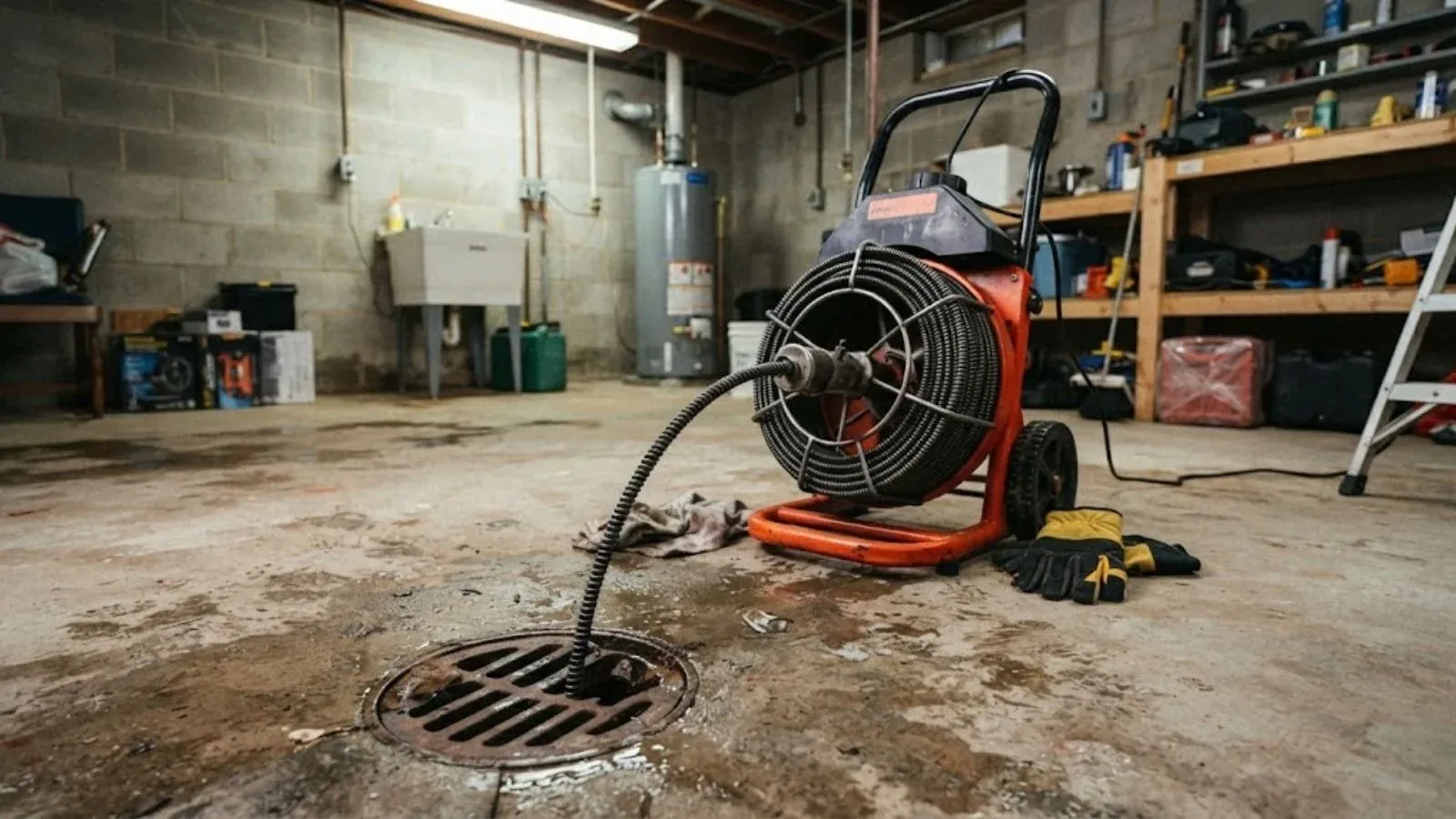
For clogs further down, a hand auger or drum cable reaches fifteen to twenty-five feet. Beyond that, a larger machine is needed. Our drain cleaning crews use cables sized to the pipe, and hydro jetting scours grease from the pipe walls. Hot tap water is fine for light grease. Boiling water can crack porcelain, and it can soften some plastic fittings.
When to stop and call a plumber
Stop if water is rising, if more than one fixture is affected, if the drain gurgles when another fixture runs, or if the same clog returns within weeks. Those patterns usually mean a problem in a main or a lateral, where a bottle of anything will not help.
If you have already poured bleach or another chemical, tell the plumber before they open the pipe. Wear gloves and eye protection, and never lean over a drain you have just treated. Harrison and Belleville neighbors send us the same calls, and the advice is the same.
Prevention that costs almost nothing
Put a mesh strainer in every tub and shower drain and empty it often. Wipe greasy pans with a paper towel before washing. Keep wipes, even ones labeled flushable, out of the toilet. Flush drains with hot tap water after washing dishes.
A small habit change is cheaper than any cleaner. If you want more, an annual camera check can show whether a line has scale or a sag that makes clogs likely.
Frequently asked questions
Rarely. Bleach disinfects but does not break down hair, grease or a wad of paper, so the water stays stopped. A plunger or an auger is a better first move.
A small diluted amount followed by lots of water is generally not dangerous. The risk is mixing it with other cleaners, which can release toxic gas, so never pour it into a drain that may hold another product.
Occasional diluted use is tolerated by most modern plastic pipe. Repeated strong pours can wear rubber seals and some metal fittings over time, and old pipes are more vulnerable.
Leave the room, open windows and get fresh air. If anyone is coughing or short of breath, call 911. Do not return until the smell is gone, and tell any plumber what was mixed.
Large amounts can harm the bacteria in a septic tank. Small amounts from normal laundry are usually fine, but a bleach pour into a clog is a poor idea if you have a septic tank.
Call Kearny DPW at (201) 998-3700 when waste backs up into the house. If their check finds the main flowing, the blockage is in the lateral that you maintain, and that is when you call us at (973) 488-5410.
Not sure what is in the line or how bad the clog is? Call the 24/7 line and we will help you sort it out.
Call (973) 488-5410