
Sewer cleaning call: what to do first while sewage is rising
A main line backup is different from a slow sink. Everything you use sends more water toward a pipe that is already full, and the lowest drain in the house takes the overflow. These steps limit the damage while the right crew is on the way.
- Stop all water use at once. That means toilets, showers, sinks, the washer and the dishwasher. Tell everyone in the house, including tenants.
- Keep people and pets out of any area with standing wastewater, and wear boots and gloves if you must cross it.
- If water is touching outlets, appliances or the furnace and you can reach the panel while staying dry, turn off power to that area. If you cannot do that safely, leave it and tell us.
- Do not pour drain chemicals or run a plunger on a toilet that is overflowing. Neither will move a blockage that is out in the yard.
- Call (973) 488-5410. If sewage is entering the house, also call Kearny DPW at (201) 998-3700 so they can check whether the town's main is flowing.
If you have photos of the basement before you clean up, keep them. They help if you later make an insurance claim.
Main line or a single fixture: reading the symptoms
One clue sorts most calls. If only the kitchen sink is slow, the clog is in that branch. If the lowest drain in the house, usually a basement floor drain or a laundry standpipe, is backing up and upstairs fixtures are gurgling too, the problem is on the main line or the lateral.
A toilet that bubbles when you run the washer is the classic sign. The air displaced by draining water has nowhere else to go, so it pushes up through the closest trap. Water that backs up in the tub when you flush is another. These tell the technician to bring a machine that reaches the street, not a hand snake.
Backup symptoms and where the blockage usually sits
This table is a general guide to what different patterns point to. A camera confirms it, but it helps you describe the problem on the phone.
| What you see | Likely location | First move |
|---|---|---|
| One sink or tub slow, everything else normal | Fixture branch line | Hand cable, often no sewer machine needed |
| Floor drain in basement fills when upstairs water runs | Main line inside or just outside the house | Open the cleanout and run a sectional machine |
| Toilets and tubs on every floor gurgle or rise together | Lateral toward the street, possibly roots or a sag | Machine with a root cutter, then camera |
| Backup returns within weeks of a cleaning | Open joint, offset or belly holding water | Camera inspection before any further cleaning |
| Neighbors report the same problem | Town main, not your lateral | Call DPW or the sewer authority for your area |
If the table points to a damaged pipe rather than a blockage, a sewer camera inspection gives the facts before any repair is priced.
What roots, grease and wipes do inside a lateral
The lateral is the pipe from your foundation to the town sewer. Where joints are loose, tree roots find the moisture and grow in through the gap. They start as hair-thin threads, then thicken into a net that catches paper and anything else that passes.
Grease acts differently. It leaves the kitchen as a liquid, cools in the pipe and hardens into a rind that narrows the opening. Wipes sold as flushable are the third common cause. They do not break down the way toilet paper does, and they knot around roots and rough spots in older cast iron and clay.
Sewage coming up through a drain?
Call the 24/7 line, stop all water use and tell us which fixtures are affected. We will send the right machine and give you a clear price before work starts.
Call (973) 488-5410Kearny DPW, KMUA and who owns the pipe
Kearny's public works page sets out the rule plainly. When sewage backs into a house, call DPW at (201) 998-3700. DPW checks the town's main sewer line. If the main is flowing, the blockage is in the lateral, and the property owner is responsible for maintaining and repairing it. If the main is blocked, the town clears it.
Parts of the Meadowlands District and the commercial and industrial areas of South Kearny are served by the Kearny Municipal Utilities Authority instead, which runs its own pumping stations and keeps 24/7 emergency staff. Some low-lying areas rely on pumping stations because waste will not flow by gravity. If you are unsure which system you are on, mention your address when you call us.
According to the Kearny public works page, the homeowner maintains the lateral, and any repair beyond cleaning follows the National Standard Plumbing Code, 2024 edition. Cleaning itself is routine maintenance.
How a sewer line cleaning visit runs
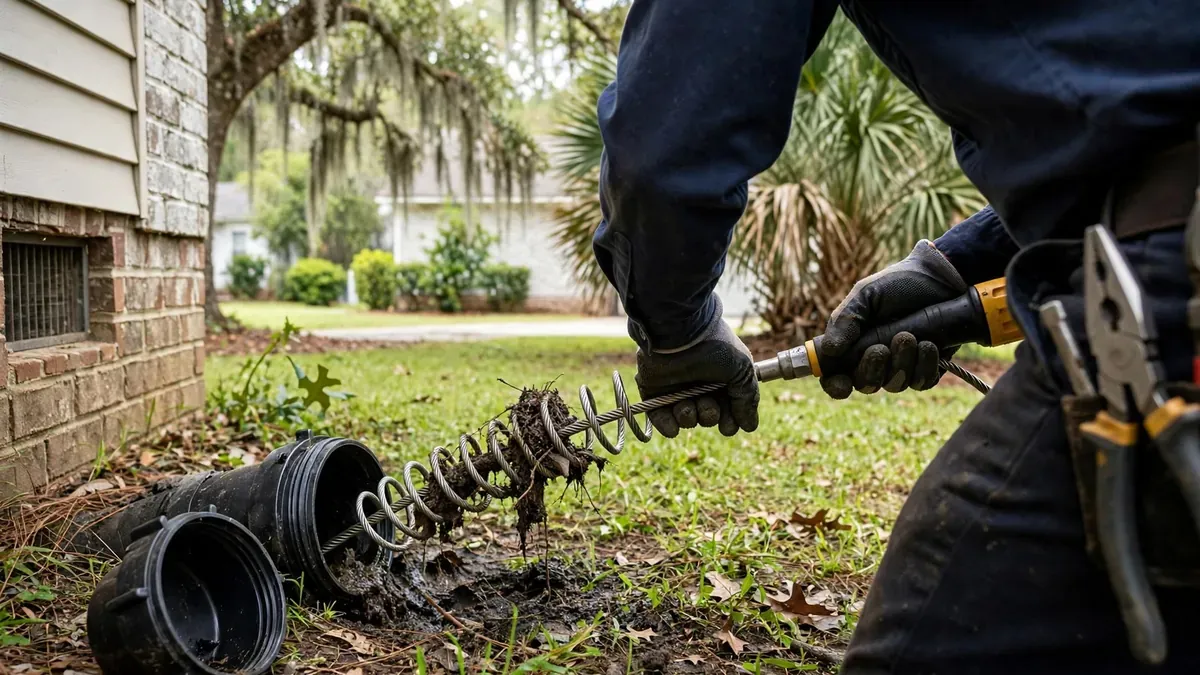
We start by finding the access point. A cleanout is a capped pipe fitting that gives direct entry to the line, usually in the basement near where the main leaves the house or outside by the foundation. With no cleanout, we may have to pull a toilet to get the cable in, and we will tell you that first.
A sectional machine feeds a spinning cable with a cutter head down the line until it meets the blockage. The head is chosen for the problem, a blade for roots or a spring head for soft debris. After the line opens, we flush it with water and, where the situation allows, run a camera to see the pipe walls and any damage.
Warning signs worth acting on before a backup
A main line rarely fails without hints. If you notice several of these, a scheduled cleaning costs far less than a flooded basement.
- Gurgling sounds from a floor drain or toilet when the washer discharges.
- A sewer smell near the basement drain or the cleanout cap.
- Water in a basement floor drain that rises slowly after heavy use, then recedes.
- Soft, sunken ground or unusually lush grass along the path of the lateral.
- Trees or large shrubs planted within a few feet of the line, especially in an older house.
When roots return every year or two, hydro jetting cleans the pipe wall more thoroughly than a cutter alone, and a cleaning schedule beats a series of emergencies.
What affects the price of sewer line cleaning
We give a clear price before work starts. The price is driven by the job itself and not by a flat rate that ignores what is in your pipe.
Sewer backup damage inside the house is often excluded from a standard homeowners policy unless you added an endorsement, so check your coverage. For a real number on your line, call (973) 488-5410.
When cleaning is not enough
A cleaned line should drain at full speed. If the camera shows a crushed section, a pipe that has dropped and holds water or a joint pulled apart, cleaning only buys time. We will tell you that, show you the footage and explain the repair options, including the honest option of cleaning on a schedule if the damage is minor.
Homes built before about 1960 commonly have cast iron or clay laterals that deteriorate with age. Where a pipe is badly damaged, sewer line repair is the next step. In Lyndhurst, township code requires the sewer lateral to be replaced in new construction or major renovation, which is worth knowing if you are planning a big project.
Keeping the line clear afterward
Simple habits do more than any product. Flush only toilet paper, and put grease in a can for the trash instead of the sink. Keep wipes, paper towels and feminine products out of the toilet. Know where your cleanout is and keep it accessible.
If a tree is the cause, a cleaning every year or two usually costs less than replacing the pipe, as long as the pipe itself is sound. Mention it if your property has large trees near the line, and we will plan the schedule around what the camera shows.
Frequently asked questions
Yes. The dispatch line runs 24 hours a day, seven days a week, and sewage entering a house is treated as an emergency at any hour. Same-day appointments are available for lines that are slow but not yet backing up, when the schedule allows.
Call Kearny DPW at (201) 998-3700. They check the main. If it is flowing, the blockage is in your lateral and you hire a plumber. If it is blocked, the town clears it. Some Meadowlands and South Kearny properties are served by KMUA instead.
It depends on how easy the line is to reach, how long and large it is, what is blocking it and whether a camera is needed. A short run with a good cleanout is simpler than a long lateral with roots. We give a clear price before work starts. Call (973) 488-5410 and describe the backup.
We advise against it. Chemicals do not reach a blockage out in the yard, they sit in the standing water and they put caustic liquid in front of whoever opens the line. A cable machine or a jet is the right tool for a main line.
A machine sized to the pipe does not harm sound cast iron or plastic. A pipe that is already cracked or collapsed can be made worse, which is why we prefer a camera look when a line has a history of problems.
A line with no trouble needs nothing. A line with roots may need cleaning every year or two, and a grease-prone line every six to twelve months. Let the camera and the history decide. A schedule is far cheaper than repeat emergency calls.
Often not by default. Sudden accidental damage is typically covered, but water that comes up through drains frequently needs a separate backup endorsement. Read your policy or ask your agent before assuming. We can provide a written description of what we found for your claim.
Not sure whether it is a clog or a main line problem? Call the 24/7 line and a dispatcher will walk through it with you.
Call (973) 488-5410