
Start by finding the source
Basement water comes from three places. Surface water runs down walls from gutters and soil that slopes toward the house. Groundwater pushes up through the floor or the cove joint when the soil around the foundation is saturated. And plumbing, such as a leaking pipe or a failed sewer line, can look like seepage.
A simple test helps. Tape a square of plastic sheet to a dry wall or floor for a day or two. Moisture under the plastic means water is coming through. Moisture on top means humid air is condensing, which is a ventilation problem and not a waterproofing one.
Free and cheap fixes outside
Many wet basements improve with outside work that costs little. Do these first, then watch the basement through a few heavy rains.
- Clean the gutters and make sure downspouts discharge at least 6 feet away from the foundation.
- Regrade soil so it slopes away from the house, about an inch per foot for the first several feet.
- Seal gaps around pipes, window wells and utility entries with an exterior grade sealant.
- Keep window wells clear of leaves and consider covers if they hold water.
- Check that paved walkways and patios do not tilt toward the wall.
If the water persists after these steps, the source is groundwater or a hidden leak, and inside drainage or a repair is the next step.
Interior sealer, drain system or exterior membrane
The main waterproofing methods differ in cost, disruption and what they actually fix. Use this to compare them.
| Method | What it does | Limits |
|---|---|---|
| Masonry waterproofing paint | Seals pores in dry or slightly damp walls | Peels if water pushes through, so it will not stop real hydrostatic pressure |
| Crack injection (epoxy or polyurethane) | Seals a single crack in a poured wall | Cracks can reopen if the wall keeps moving |
| Interior perimeter drain with sump | Collects water at the footing and pumps it out | Manages water, does not keep it out, and needs power and maintenance |
| Exterior membrane and drain | Stops water before it reaches the wall | Digging is costly and disruptive, so it suits severe cases |
| Downspout and grade work | Reduces water at the source | Does not fix a high water table or a sewer problem |
Match the method to the source. Paint on a wall that leaks under pressure is a common waste. For drainage and pumping work, see basement waterproofing.
A reliable plan often combines two methods, such as better grading plus an interior drain with a pump.
Basement damp and you are not sure why?
Call the 24/7 line and describe where the water appears. We will tell you whether it sounds like grade, groundwater or a pipe, and give a clear price before work starts.
Call (973) 488-5410Sealing cracks the right way
Hairline cracks in poured concrete walls are common as the building settles. A vertical crack that leaks can be injected from inside with epoxy, which bonds the concrete, or polyurethane, which stays flexible and fills a crack that is still moving.
Horizontal cracks in block walls are different. They can signal soil pressure pushing the wall in. Sealing the crack will not help, and the wall may need structural review. If a crack is wider than a pencil or the wall bows inward, call a structural professional before spending on sealers.
How an interior drain and sump pump work together
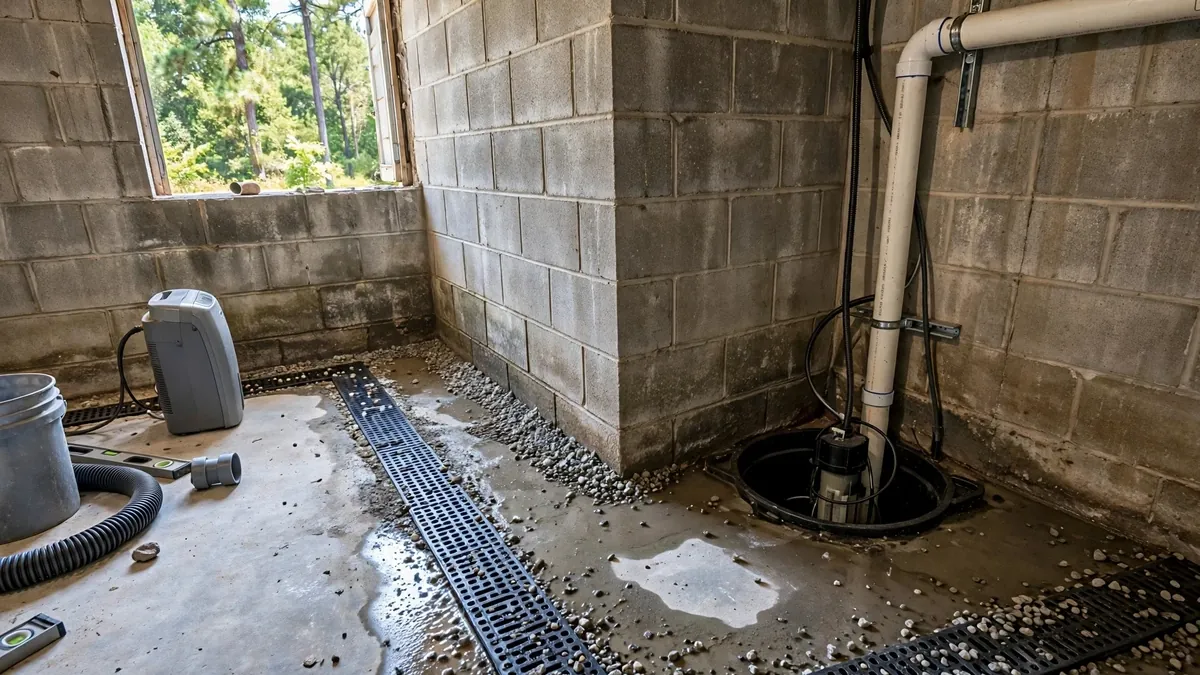
An interior drain is a perforated pipe set in gravel below the slab, along the footing. Water that rises around the foundation enters the pipe and flows to a sump pit. A pump in the pit lifts it out and away from the house.
This works because it relieves pressure rather than fighting it. The pump needs a dedicated outlet, a check valve, and a discharge line that ends away from the foundation. Many people add a battery backup, since heavy storms are when power often fails. Our sump pump installation and repair page covers pumps in detail.
Where the water goes matters in Kearny and Lyndhurst
Kearny sits beside the Passaic and Hackensack rivers, with Meadowlands wetlands to the east. As a general matter, low-lying property near rivers and wetlands drains slowly after heavy rain, which can keep soil around a foundation wet longer.
Drainage rules also affect where a sump pump can discharge. Lyndhurst's township code says stormwater and unpolluted drainage may not go into the sanitary sewer. Sump discharge belongs on the lawn or in a storm line, and not in a sewer cleanout or floor drain. Ask your town's construction code office what applies to your address.
According to the Lyndhurst township code, stormwater and unpolluted drainage may not go into the sanitary sewer, a rule worth remembering when you plan a sump discharge.
Source: Lyndhurst township code (chapter 12), Kearny town site and general geographic facts
Older foundations and what to expect
Many older homes were built before modern waterproofing existed. Stone, brick and block foundations can be porous and may have lime mortar that erodes. Kearny's mills and housing date to the late 1800s and early 1900s, so older foundations are common, though each house needs its own inspection.
In an older basement, expect efflorescence, a white powder left when water evaporates from masonry. It is a sign of moisture movement and not a stain to scrub away. Repointing joints, sealing from the outside where possible and managing water with a drain are the usual approach.
Humidity, condensation and mold
Not every damp basement leaks. Warm humid air hitting cold walls leaves water on the surface, and that can feed mold. A dehumidifier set to hold humidity under about 50 percent, plus insulated cold water pipes, often solves it.
If you see mold, fix the moisture source first. Cleaning mold without drying the area only buys a short break. Small patches on hard surfaces can be washed, while mold on drywall or insulation usually means removal. Large areas call for a professional.
Check for plumbing leaks before you waterproof
A wet spot near a water heater, a washer hookup or a wall that holds supply lines might be a pipe, not groundwater. Shut off all water in the house and check the meter for movement. If it still turns, you have a leak.
A damp line along the floor under a toilet stack, or a sewer smell with water pooling at a floor drain, can mean a sewer line problem. In those cases a leak detection visit and a camera inspection will find the real cause faster than waterproofing guesses.
What drives the price of waterproofing
We give a clear price before work starts. These factors shape the scope.
Mold cleanup, structural repairs and landscaping are usually separate from waterproofing. For a plain price on your basement, call (973) 488-5410.
When to call a professional
Call a pro when water returns after you fix the outside, when walls are bowing, when you see standing water after most rains, or when you cannot find the source. A proper evaluation looks at grade, gutters, the foundation and the sump pit together.
Some work is also regulated. Plumbing connections and discharge lines are subject to code, and permit rules vary, so ask the construction code office. Our Lyndhurst and Harrison pages cover neighboring areas we serve.
Frequently asked questions
Start outside. Clean gutters, extend downspouts at least 6 feet and regrade soil away from the house. These steps cost little and handle surface water. If seepage continues, move to crack sealing or an interior drain.
It can for a damp wall with no pressure behind it. If water is actively pushing through, the paint blisters and peels. Treat it as a finish, not a drainage solution, and test with the plastic sheet trick first.
Tape plastic sheeting to the wall for a day or two. Moisture on the wall side means water is coming through. Moisture on the room side means humid air is condensing. Condensation calls for a dehumidifier and insulation, not waterproofing.
Only if groundwater rises above the floor level or collects at the footing. A pit and pump relieve pressure by moving water out. Many basements stay dry with drainage fixes alone, so diagnose before you buy a pump.
Interior drains and sealers manage water but do not stop it at the wall. For most homes that is enough. Severe cases with constant pressure may need an exterior membrane, which is more expensive and requires digging.
We have no local data to cite. As a general matter, Kearny sits by the Passaic and Hackensack rivers with wetlands to the east, and low ground drains slowly after heavy rain. A basement inspection tells you more than the map does.
Lyndhurst's code says unpolluted drainage may not enter the sanitary sewer. Discharge should go to the yard or a storm line, away from the foundation. Ask the construction code office in your town, because permit and drainage rules vary.
Still unsure where your basement water is coming from? Call the 24/7 line and we will help you sort it out.
Call (973) 488-5410