
Signs the supply pipes are wearing out
One leak does not mean a house needs new pipes. A pattern does. These are the signs that point to widespread wear.
- Rust-colored or brown water when you first open a tap, especially hot water.
- Low pressure at several fixtures even though the street pressure is fine.
- Pinhole leaks or green crusty spots on pipes, in more than one place.
- Repairs that keep reappearing a few feet from the last one.
- Pipe that looks heavily scaled, flaking or swollen at the fittings.
- Hot water that takes a long time to arrive or arrives weak.
If you are not sure the problem is the pipes, leak detection can tell you whether one hidden leak is behind the symptoms.
How galvanized, copper and older plastic pipe fail
Galvanized steel is the classic repipe candidate. It is coated in zinc, and over decades the coating wears and rust forms inside. The bore closes up from the inside like a clogged artery, so flow drops long before it leaks. Houses built before about 1960 are the most likely to have it.
Copper lasts a long time but can pit from the inside, especially at elbows where flow is turbulent. Old solder joints can weep. Some polybutylene pipe, a gray plastic used from the late 1970s into the 1990s, is known to fail at fittings and is often replaced as a precaution.
PEX, copper and CPVC for a house repipe
Most whole-house repipes use one of three materials. Here is how they compare in practice.
| Material | Strengths | Trade-offs |
|---|---|---|
| PEX (cross-linked polyethylene) | Flexible, fewer fittings, quieter, handles some freezing better, quicker to install in finished walls | Not for outdoor sun exposure, and it needs the right fittings and tools |
| Copper | Long track record, tolerates heat, no plastic taste, easy to inspect | More labor, more joints, material cost varies, and can pit in aggressive water |
| CPVC | Rigid plastic, resists corrosion, fine for hot and cold | Becomes brittle with age, more fittings than PEX, less common for full repipes |
We recommend a material based on the house, not a favorite. The code office accepts the approved pipe the plan specifies.
Whichever material, the new supply lines connect to fixtures you may also want updated. See plumbing installation if you plan to add or move any.
Repipe the house or repair a section
A repipe is a big job, so the first question is whether you need one. If the problem is a single failed run and the rest of the pipe is in good shape, a section repair is the honest answer. We will say so.
A full repipe makes sense when galvanized is closing up throughout, when leaks recur in several places, when lead or polybutylene is involved or when you are already opening walls for a renovation. Doing it then spares you from opening them twice.
A partial repipe is also common. Replacing the basement mains and the bathroom risers while leaving a good kitchen run is often the efficient middle ground.
Wondering if your pipes need replacing?
Call the line and describe what you see. We will tell you whether a repair or a repipe makes sense and give a clear price before work starts.
Call (973) 488-5410How a repipe goes, day by day
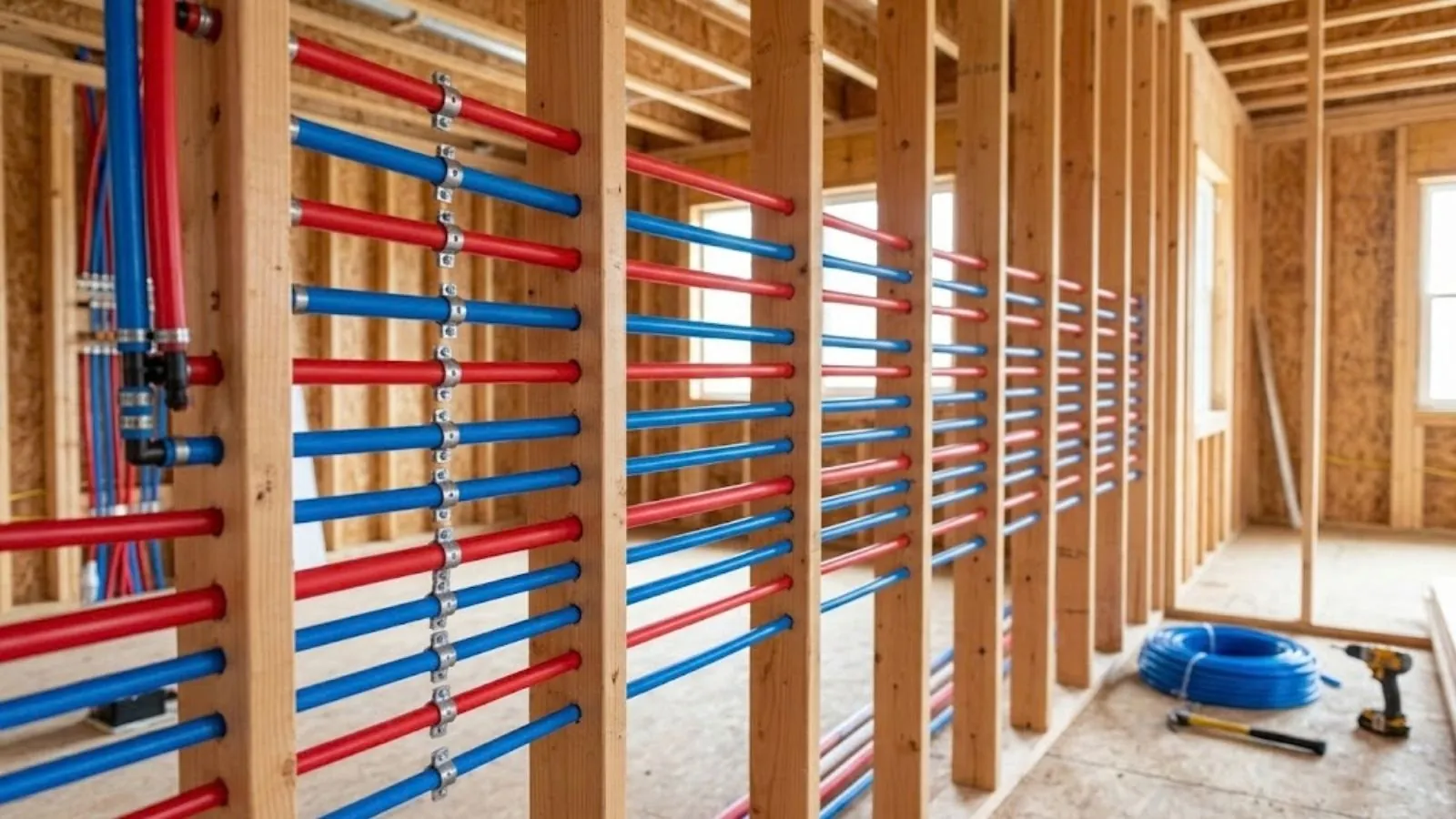
Most single-family repipes take a few days, though size, access and finish work change that. We start by planning the routes and shutting off water at the main. New lines run through basements, crawlspaces and attic or wall cavities, and the old pipe is cut out or abandoned in place if it is not in the way.
We reconnect each fixture, restore water and test the system under pressure. Water is off for part of each work day, and we tell you the schedule so you can plan showers, laundry and cooking. Bring up any medical or household needs when you book.
Walls, patching and living through the work
Opening walls is the part homeowners worry about most. PEX can often be fished through existing cavities with small access holes, which keeps drywall repair modest. Copper and rigid pipe usually need larger openings in some places.
We keep the work area clean and protect floors, and we tell you before work starts which walls will be opened. Patching and painting is a separate trade unless we agree otherwise. Tell us about finished rooms, tile or plaster, because those change how we route the pipe.
Where the service line fits in Kearny
Repiping covers the pipe inside the building. The line from the street to your meter is the service line, and it is a separate project. Kearny's Water Department buys all its water from the North Jersey District Water Supply Commission and posts a lead service line inventory with an address lookup on its page. Lines marked Lead or Galvanized Requiring Replacement are prioritized, and Unknown lines are treated as possibly lead until verified.
Check the lookup before a repipe. If your service line is on the list, tell us, because we would plan the interior work around the connection point. Our page on water service line repair explains that side. Across the river in Belleville, the water report notes that homes built before 1950 may have a lead service line, so Belleville owners should ask the same question.
According to the state Uniform Construction Code, a construction permit is required for plumbing work on existing buildings, with rough piping and final inspections on one- and two-family dwellings. Repiping follows the National Standard Plumbing Code, 2024 edition.
Permits and inspections for a repipe
In New Jersey, plumbing work on an existing building needs a construction permit. The only listed exemption is ordinary maintenance, which includes routine repair. Replacing the supply piping through a house is not routine repair.
The Uniform Construction Code applies plumbing rough piping and final inspections on one and two family dwellings. Kearny's Construction Code Enforcement office, reached at (201) 955-7880 on weekdays, handles applications, and all permits require an inspection. Kearny's plans must follow the National Standard Plumbing Code, 2024 edition. Ask the Kearny construction code office about timing, because processing runs about 7 business days for small jobs and longer for complex ones.
What affects the price of a repipe
We give a clear price before work starts, in writing. The price depends on conditions you can see and some you cannot.
Repiping costs far more than a section repair but far less than repeated water damage. Want a plan for your house? Call (973) 488-5410 and tell us what is leaking or running brown.
Pressure, flow and what to expect afterward
After a repipe, most people notice stronger flow at the tap, especially where galvanized was choked. Hot water arrives faster when new lines are sized well. Rust-colored water usually clears up because the corroded source is gone.
Pressure also depends on the street supply, so a repipe will not fix a low-pressure supply on its own. If a burst pipe has already damaged a section, we can fold that repair into the same plan.
Frequently asked questions
Look for a pattern: brown water, low pressure at several fixtures, repeated leaks and heavily scaled pipe. One leak alone rarely justifies a repipe. We can inspect the pipes, show you what we find and tell you honestly whether a repair is enough.
A typical house takes a few days. The number depends on size, access and how many walls must be opened. Water is off for part of each work day, and we give you a schedule so you can plan around it before we start.
It depends on the size of the house, the material, how easy the walls and floors are to reach and how many fixtures connect. We give a clear price before work starts. Call (973) 488-5410 with a description of the house for a real number.
For most houses, yes. PEX is quieter, flexible and quick to install, and it resists freezing damage better than rigid pipe. Copper has a longer track record and handles heat well. Both pass inspection when installed correctly.
Yes in most cases, because replacing supply piping is more than routine repair. Permit rules vary, so ask the construction code office. State code requires inspection of rough piping and final fixtures on one and two family homes.
Usually. Water is shut off for part of each work day, and we plan around it. Some households choose to stay elsewhere for a night or two if there is a need for constant water, such as medical equipment.
If clogged galvanized lines cause it, yes. If the cause is low street pressure, a faulty regulator or a partly closed valve, no. We check pressure at the meter side before recommending a repipe.
Unsure whether it is a repipe or a repair? Call and a dispatcher will help you sort it out.
Call (973) 488-5410